What Do You Mean?
I toyed with writing about a lot of things this week: Backrooms (which is good, go see Backrooms); my upcoming trip to Vegas to visit my ailing* father for what might be the last time; feeling good about my mental and physical health after a week of really great social interactions, including with one of the Masters Swim Team members at the pool I go to trying to recruit me to join; or my recent culinary adventures, which include making two infused simple syrups (cinnamon and ginger-saffron) for a homemade tiki cocktail that saw me finally getting to use the scorpion bowl I ordered from Trader Vic's four full years ago, which has been patiently waiting for me to infuse it with an array of moderately colonial-fantasist spirits and nectars, which I did and it was delicious. Anyway, the thing that has crowded out all of that other much more and less pleasant stuff in my brain is what I've become convinced is the great political question of our time: What do you mean?
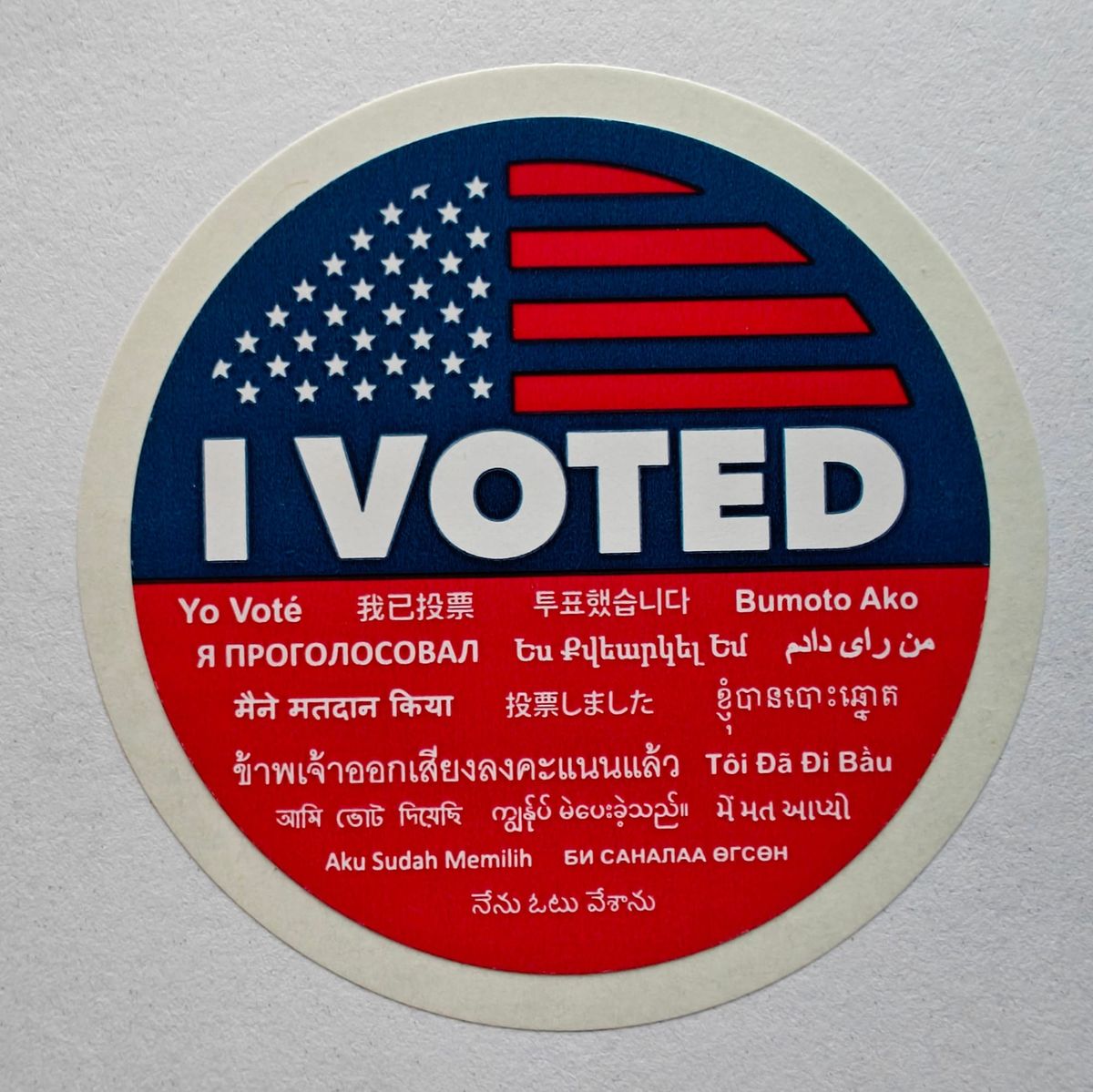
Here in California we had a primary election earlier this week, which brought up a few iterations of a familiar conversation: Are you voting? Who are you voting for? Why? How could you? And so on, mostly around the topic of which categories and candidates we'll vote for and why. My usual method is to vote on every issue and position unless I have a strong aversion to the candidate, or they are running unopposed and I don't have a strong affinity for them. Because of my political leanings (communist), I am almost never thrilled with my options, and don't really believe the current electoral system is effective or fixable. That said, I vote the same way I play the lottery when the jackpot is big: with little in the way of hope for anything good beyond the dopamine hit I get from neatly filling in tiny bubbles thanks to the operant conditioning of standardized tests. But I love arguing and discussing politics because they're a good indicator of a person's values and how much of an idealist or pragmatist they are. That said, there's an Overton Window for me personally, outside of which it's more or less useless to have these conversations because we might as well be speaking different languages. So I frequently find myself arguing with liberals, because I think we generally want the same things, but have different tolerances for how we get there.
The difficulty here—and where the earlier question and title of this newsletter come into play—is establishing how much space exists in that conditional, "I think we want the same things," and how much allowance we can give each other before agreement becomes impossible. The ambiguity of big idea statements gives a lot of room for weasels to expound on the virtues of their beliefs without having to actually hold any meaningful position. You see this a lot in right wing circles where having no fixed policy besides opposing liberalism and multiculturalism has become a fundamental tenet, but a lot of people across the ideological spectrum are guilty of it because it's much easier to say vaguely disapproving things than specifically enumerating the reasons you disapprove. You end up with a very superficial set of statements that often mean the opposite of what they imply.
Two examples come to mind immediately. Yesterday while walking to a baseball game, a friend and I were talking about J.K. Rowling. Both of us agreed that Rowling sucks, but she brought up a point I've heard a lot: That early on, Rowling's rather mild publicly viewable positions (liking some tweets and not coming out strong for trans women) and the rebukes she faced online reinforced her more explicit and increasingly hateful turn to TERFism. I pushed back on this for a couple of reasons, one of which is that prior to her publicly coming out as "gender critical" I had been uneasy about her, but not one of the people baying for blood, and the essay she published struck me as so validating of every bit of harsh criticism she received up to that point that I remain regretful of having ever given her the slightest amount of undeserved grace. The second is that I refuse to let people justify odious views and behavior by saying that a negative reaction from an opposing viewpoint drove them to it. People being annoying or mean to you on Twitter does not justify trying to strip them of as many rights as you can. You can actually see this at work in virtually every aspect of the current "trans debate" as people conflate their general discomfort and personal unpleasant interactions with trans people online with increased complacency if not outright support for restrictive legislation. Ostensible Liberals like Rowling or Gavin Newsom rely on this conflation to justify their positions as popular, but supporting gender-affirming care for trans kids has zero political component, so its popularity is irrelevant, and mostly driven by politicians and the media pretending there's anything like a public interest in debating it.
The second example is the tendency of politicians to frame their positions as anti-war when they are very clearly pro-war as long as they get to decide where who and how. Again, it's useless to talk about right wingers who rarely even pretend not to be horny for the next global conflict, but there are lots of people with a D next to their names who claim to have "learned the lessons of Iraq" but, when pressed, usually mean strategic and tactical decisions, and not, you know, what I consider the lesson of Iraq to be which is DON'T START A WAR WITH IRAQ. There's a lot of bluster always about ending forever wars, but that typically manifests as a nice idea rather than any concrete position or actions that might accomplish it. It's way easier to lament eternal conflict than to push back on the things that enable it, so we will likely continue to build out surveillance, and militarized policing, and all of the other small intrusions that are supposed to make us safer but really just make us feel more afraid and retroactively justify the greater intrusions that perpetuate forever war, like drone strikes and unrestricted arms sales to allied countries in fights with our adversaries.
To close this out, I want to return to that question: What do you mean? I think it's important to consider, and to ask when someone makes a broadly concilliatory but vague statement of belief, even if the answer leads to more disagreement than concordance. The meta-political issue of our time is how much we are willing to disrupt the status quo to save ourselves, and its useful to know if you or the person you're talking to are even able to see specific issues in the same way. That's not to say that we all have to pick up arms and storm the Winter Palace, but it helps if we can agree that Czarism just ain't cutting it.
*- Ailing is the only appropriate euphemism I can come up with for an 85 year-old man who doesn't answer his phone or get in touch for two weeks, then calls to vaguely say he's been in hospital and had an operation and gets frustrated when I try to get any additional info or ask if he'd like me to come earlier than planned.