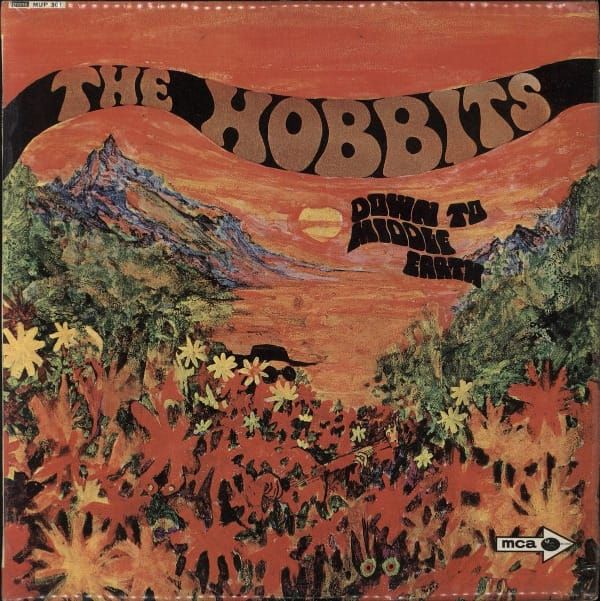
Down To Middle-earth
My favorite media analysis podcast (favorite one I don't work on, at any rate) is Just King Things, a podcast where the books of Stephen King are discussed in publication order. It's part of a network of podcasts that consist of shows dedicated to various different types of media, like the Fallout games, publications in the field of Game studies, and fantasy literature. I've dabbled in the non-King shows, but with the beginning of a new year, they're starting a unit on Tolkien that will last throughout 2026 and is dubbed "The Lord of the Year."
This has inspired me to re-read (or in the case of The Silmarillion, to read) the works of Tolkien under discussion. It's been over 15 years since I've cracked the spine on any of my Middle-earth books, other than maybe to show off/consult one of the foldout maps, but reacquainting myself with The Hobbit has been surprisingly enjoyable, since I am generally pretty dismissive of it as being okay, but weak tea when compared to the other Lord of the Rings books.
I'd still say that I enjoy the mode that the later books are operating in, which is a more formal, detached, historical approach to storytelling, versus the silly ol' Uncle John Ronald that shows up to narrate The Hobbit. It isn't that the Rings books are more mature, though that's also true, but that the world of The Hobbit feels like it's a story from our world, where The Lord of the Rings feels like a historical novel about a completely different place with its own rules and reality that are evoked so strongly in the prose that the appendices are almost redundant, save the context they provide things like Aragorn and Arwen's relationship which kinda comes out of nowhere if you don't read them.
The great promise of fantasy is that for a few hours while we read, watch, or brood on the worlds created by another's words, we get to inhabit them completely. That's not exactly missing from The Hobbit, but it undercuts itself frequently by including some goofy or anachronistic description in an aside to the reader. I think this bothered me about The Hobbit when I thought of it as a prelude to The Lord of the Rings rather than a comic novel set in the same high fantasy world as The Lord of the Rings. It's a very good light fantasy novel, but the tonal disconnect between it and the other books means that you come away disappointed if you're expecting the same breadth and depth across all four books.
It's hard to get my point across without sounding like I'm slagging off less-grueling fantasy works as somehow inferior, which is not my point. Good writing is always a challenge, and The Hobbit is very well written. It's just that...well, you may have noticed that things are not going great on Real-earth right now, so the less I'm reminded of the state of things as they are when I'm traipsing through a make-believe world, the better. That's more difficult when the author is telling you about how this trip is just like popping down to the post office, or how a famous English language idiom was invented by a fictional halfling.
As much as I'm enjoying The Hobbit, I find myself looking forward to the next books as a place to get lost for a little while in the deep dark forest of Tolkien's verbosity. I'm sure we'll be revisiting the books and movies at least a few times throughout the year in these posts, so I'm sorry/you're welcome in advance.
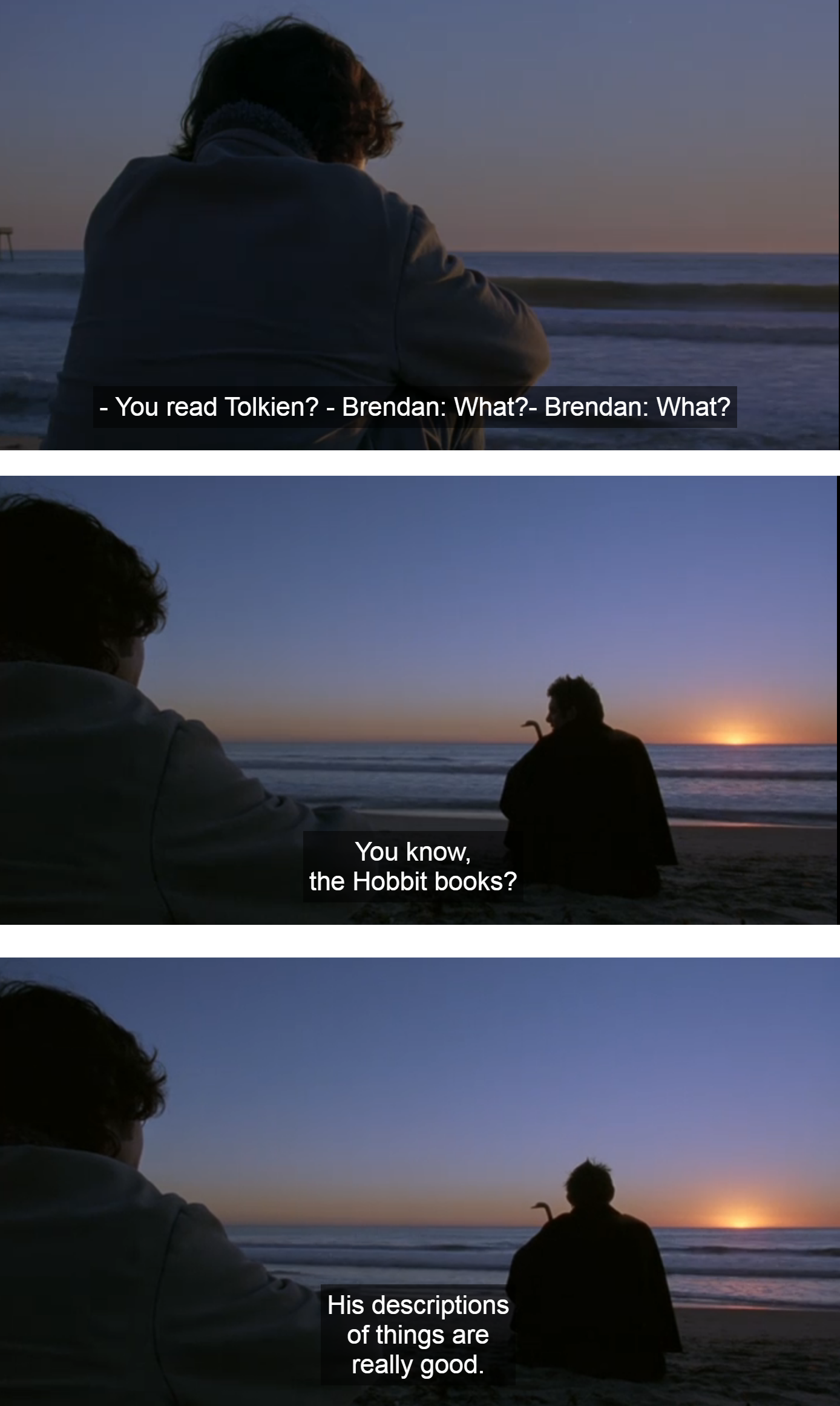
I've also been thinking about this exchange from Brick a lot:
It's true.